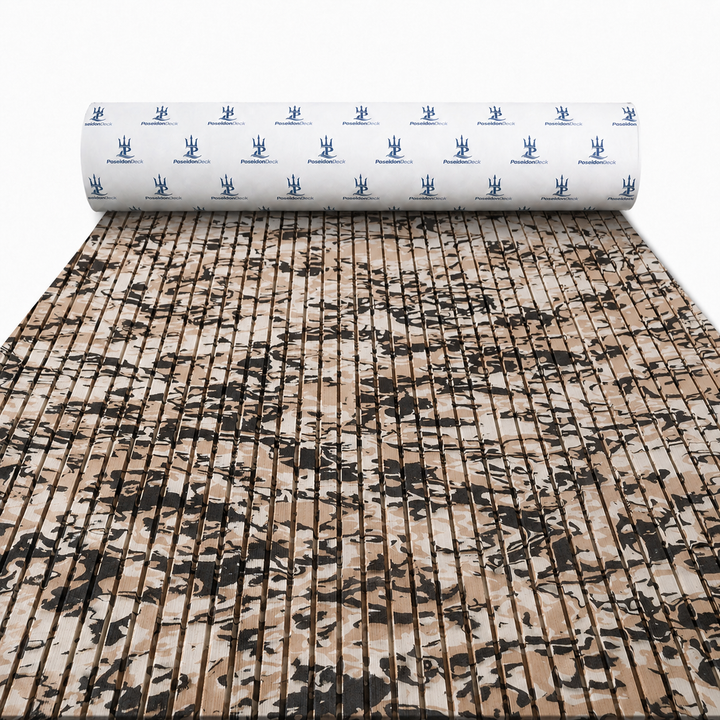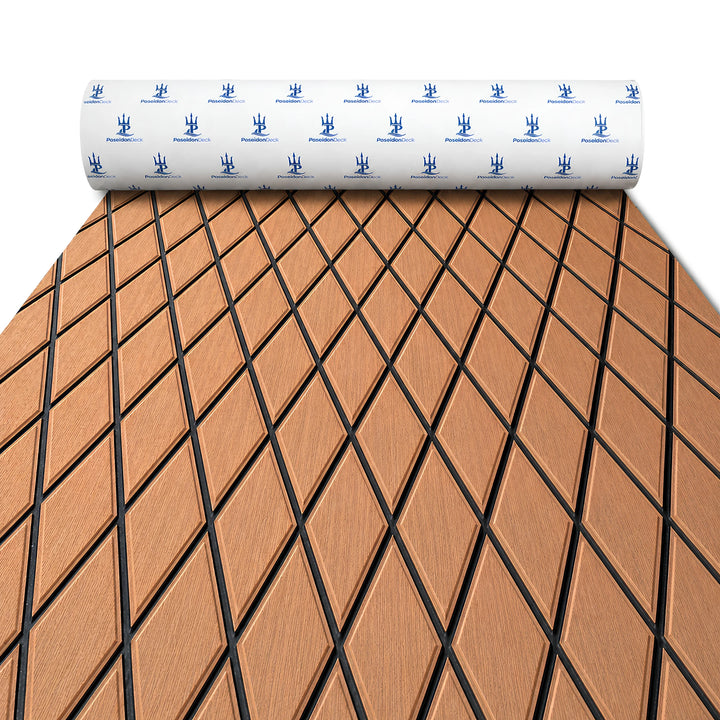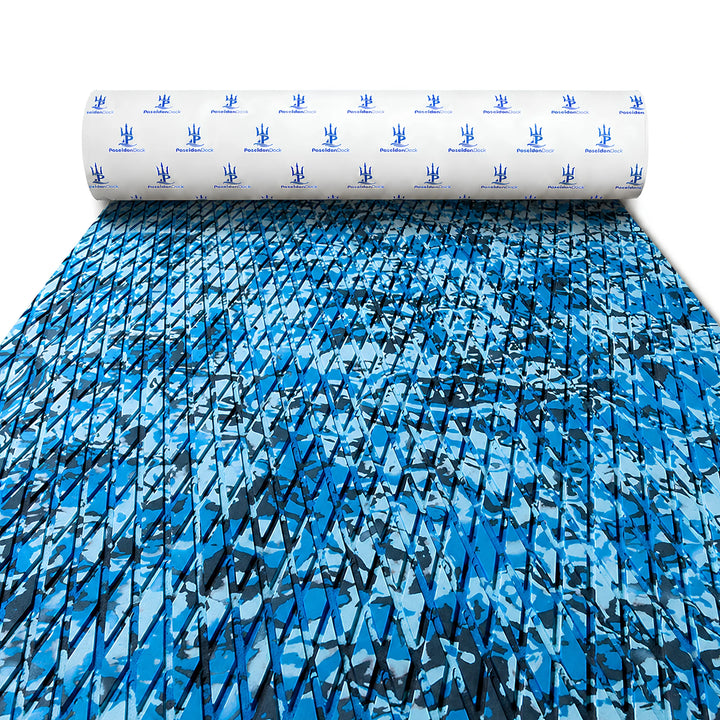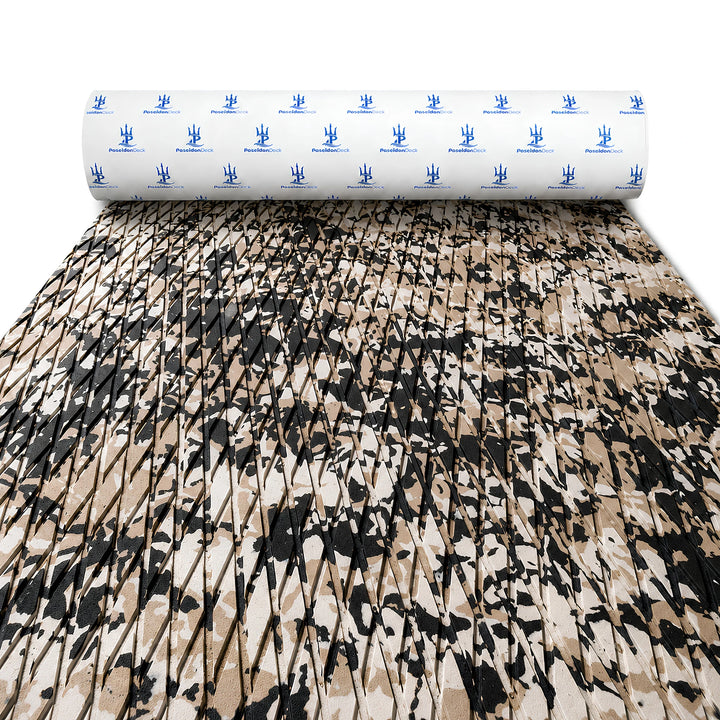
Camo Diamond EVA Foam Boat Flooring
From $101.00
View flooring optionsFishing & Bass Boat Flooring Guide
Fishing boat flooring should support secure footing, standing comfort and practical day-to-day maintenance. EVA foam is a customizable marine deck surface that can be planned around casting decks, cockpits, consoles, hatches and other high-use fishing zones.
Use this page as the fishing and bass-boat planning hub. It connects casting-deck flooring, hatch layouts, trolling-motor zones and small fishing accessories with the main EVA flooring buying path.
Fishing boats often have many storage lids, pedestal mounts and trolling-motor components. Treat each hatch as a separate panel and preserve every hinge, latch, drain and service point.
For the full fishing-specific workflow, read the Fishing Boat Flooring & Casting Deck Pads Guide.
Fishing decks see water, fish residue, bait, mud, sunscreen and grit. Texture helps provide a defined surface, but no deck should be described as slip-proof. Routine rinsing and compatible cleaning still matter.
See the boat flooring grip guide.
Small EVA accessories can solve localized problems without reflooring the entire boat. Examples include trolling-motor contact pads, fish rulers, hook pads and cooler top pads.
Map the bow, cockpit, helm and aft deck separately. Then confirm that each panel fits inside the selected sheet size and that directional patterns align the way you want.
Use the measurement guide and sheet calculator.
Universal sheets are suitable for manageable DIY zones. Custom CNC flooring becomes more useful when the deck contains many hatch lids, curves, routed borders or model-specific panel shapes. See Custom Boat Flooring.
For material benefits, limitations, thickness, firmness and buying-route guidance, read the EVA Foam Boat Flooring Guide.
It can be a practical surface when hatch access, pedestal mounts, trolling-motor hardware and drainage remain clear.
Yes. Sharp hooks and knives can puncture foam, which is why dedicated hook pads and hard work surfaces still have value.
No. Universal sheets can work for DIY layouts, while custom or model-specific kits are useful when exact fitment is verified.
Textured EVA foam provides a purpose-built walking surface for casting, moving around the deck and handling gear.
Cushioning can reduce the hard-deck feel underfoot when anglers spend extended periods standing at the bow, console or cockpit.
Bow decks, cockpits, helm areas and swim platforms can be measured as separate zones for easier fitting and replacement.
Compare textured and camo-style universal EVA sheets for casting decks, cockpits and other high-use zones. These products are cut-to-fit flooring options; use the Custom Boat Kits path when you need a model-specific fitment.
Explore deck-zone planning, maintenance and non-slip surface considerations for fishing-oriented boat layouts.
Compare common marine flooring choices by comfort, installation, maintenance and how the boat is used.
Prepare high-use deck zones correctly with a step-by-step workflow for measuring, dry fitting, cutting, bonding and aftercare.
Prioritize secure footing, comfort, easy maintenance, practical installation and a layout that does not interfere with hatches, drains or deck hardware.
EVA foam is used as a cushioned marine deck surface for many fishing-boat layouts. Fit, adhesive choice and surface preparation should match the specific boat and operating conditions.
Remove loose debris, rinse with fresh water and use mild soap when needed. Avoid harsh chemicals and aggressive high-pressure cleaning around seams and edges.