
Article guide
Buying Guide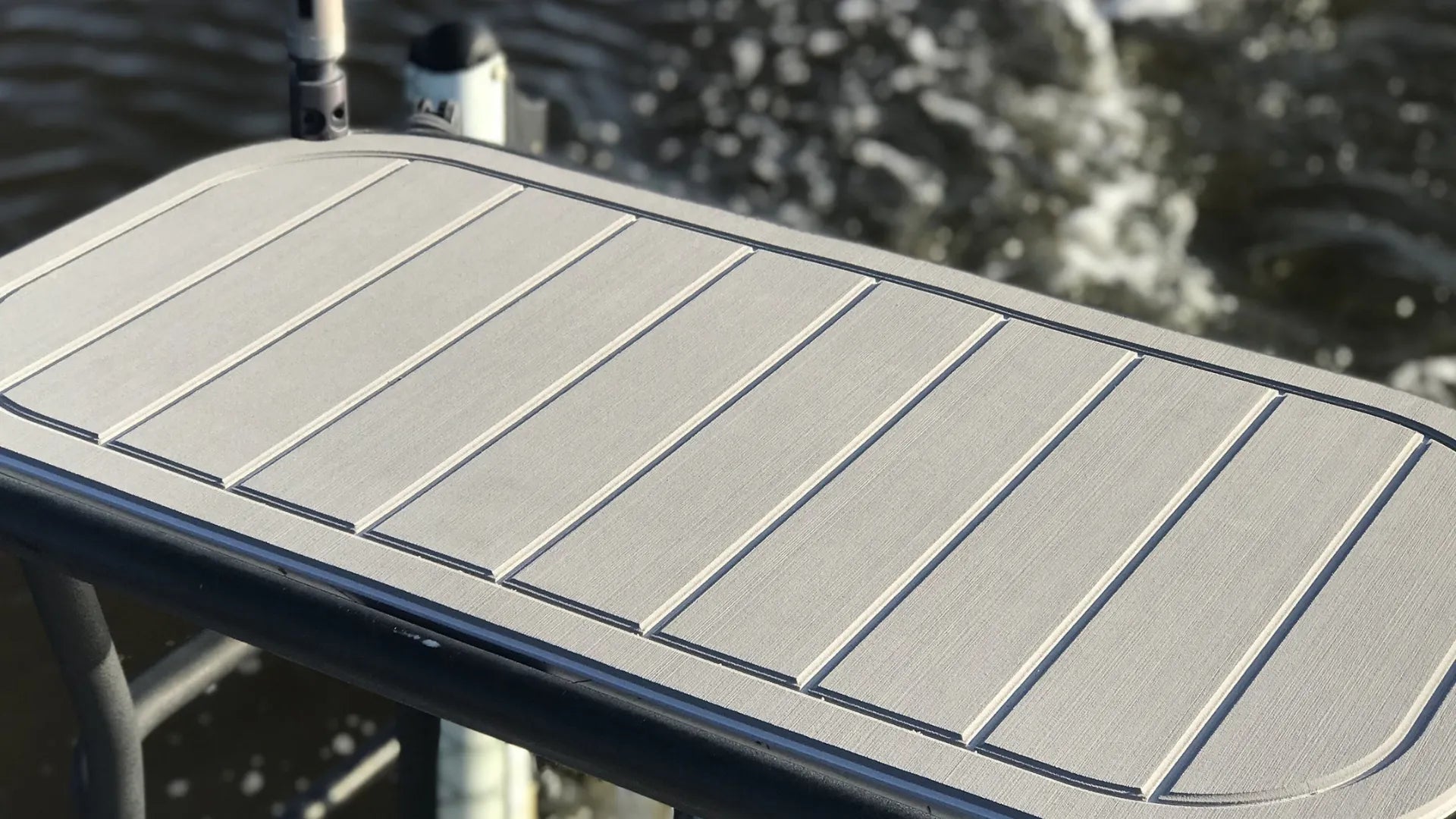
Article guide
Buying GuideUpdated August 2026
EVA foam is a practical fishing-boat flooring option when it is installed on a stable deck, divided into manageable panels and cleaned soon after fish, bait, mud, sunscreen or fuel residue reaches the surface. It is especially useful at helm stations, casting positions, cockpit standing zones and boarding areas. It is not automatically the best surface for every fish-processing area, commercial washdown zone or deck that receives frequent dragging from anchors, coolers and batteries.
The most useful question is not simply “Is EVA good for fishing boats?” It is “Which parts of this boat will benefit from cushioning and texture, and which parts need the fastest possible washdown or the greatest resistance to cuts and heavy equipment?” Public fishing and boating discussions show both successful installations and real regrets. The difference often comes from where the foam was installed, how quickly contamination was cleaned, whether sharp gear was controlled and whether the substrate was prepared correctly.
This guide converts those recurring owner concerns and installation-video lessons into a practical buying plan for PoseidonDeck universal cut-to-fit EVA foam sheets.
| Fishing-boat area or use | Starting recommendation | Why |
|---|---|---|
| Helm standing zone | Strong starting area | A defined panel can add cushioning and texture without committing to the entire deck. |
| Bow or rear casting position | Strong starting area | Long periods of standing make a planned panel useful, provided hatches and trolling-motor hardware remain accessible. |
| Family-fishing cockpit | Usually suitable with prompt cleaning | Sectional sheets can work around seats, drains and storage while keeping the layout replaceable. |
| Heavy fish-processing or bait-preparation zone | Conditional | Blood, scales, oils and bait residue can settle into texture. Consider a small test zone or leave the highest-mess area in a faster-washdown material. |
| Charter, commercial or frequent high-pressure washdown area | Compare alternatives first | Very frequent contamination, aggressive cleaning and heavy traffic may favor a harder continuous surface. |
| Aluminum or jon-boat panels | Often suitable after preparation | Universal sheets can fit simple panels, but oxidation, loose paint, rivets and flex must be addressed first. |
| Soft plywood, active corrosion, delaminated fiberglass or trapped moisture | Do not install yet | Repair the structural deck before applying any bonded surface covering. |
If EVA is already your leading choice but you are still weighing cleaning, heat, stains, installation effort and future removal, read whether EVA foam boat flooring is worth it before ordering.
Fishing-boat discussions are more divided than general recreational-boat discussions because the contamination and equipment risks are different. One owner may use EVA mainly as a clean helm pad. Another may leave fish blood on a textured casting deck for several hours, drag a cooler across it and then use aggressive washdown. Those are not comparable tests.
Owner reports conflict: some describe successful cleanup after normal fishing use, while others report visible staining after blood or organic residue remained on the surface for hours. The responsible conclusion is not that EVA is either stain-proof or impossible to clean. The practical conclusion is that prompt rinsing and compatible cleaning matter, especially on light colors and deep textures.
Several experienced anglers prefer EVA at the helm, cockpit or standing positions while leaving the highest-mess processing area in a harder washdown surface. Starting with one defined zone also lets the owner evaluate heat, cleaning effort, gear habits and appearance before covering more of the boat.
YouTube videos are useful for seeing template transfer, cutting, dry fitting, gradual liner removal and roller pressure. They often compress the hours spent removing old material, cleaning residue, correcting templates and aligning multiple hatch pieces. A smooth ten-minute video should not be interpreted as proof that every fishing-boat layout is a quick project.
A completed installation video demonstrates fit and appearance on that day. For cleaning, edge performance, fading, cuts and removal questions, follow-up videos and comments are more useful when they identify the substrate, product, color, storage, sun exposure and maintenance routine.
Use Reddit and YouTube as issue-finding tools rather than as a source of universal failure rates. Match any review to a similar deck material, fishing style, contamination level and installation method.
| Area | Potential benefit | Planning requirement |
|---|---|---|
| Bow casting deck | Cushioned standing surface and coordinated appearance | Keep hatch gaps, pedestal bases, trolling-motor hardware and drainage clear. |
| Helm | Defined high-use standing pad | Check pedal, seat, console and access-panel clearances. |
| Cockpit | Sectional coverage around passenger and fishing traffic | Keep drains and scuppers open and plan panels for future replacement. |
| Rear casting platform | Additional texture and cushioning | Protect exposed edges from repeated boarding and washdown. |
| Boarding step | Textured wet-foot contact area | Avoid narrow pointed pieces that can catch footwear or equipment. |
| Cooler and tackle station | Defined floor zone and coordinated appearance | Lift equipment; do not drag rough cooler feet, anchors or batteries across the foam. |
Not automatically. A full-deck installation increases material cost, cutting time, seam management and future removal work. It also places foam in areas that may receive very different contamination and equipment loads.
A lower-risk sequence is:
Panelized coverage is not an inferior compromise. It can preserve drains and service access, reduce cutting risk and allow one high-wear section to be replaced without removing the entire deck.
| Fishing-boat goal | PoseidonDeck starting product | Planning note |
|---|---|---|
| Versatile casting deck and cockpit | Diamond Pattern EVA Foam Boat Flooring | Defined texture works across independent panels and does not require continuous stripe alignment. |
| Fishing, hunting or utility style | Camo Diamond EVA Foam Boat Flooring | Plan for mud, bait, hooks and frequent cleaning rather than choosing from appearance alone. |
| Clean, simple deck panels | Solid Color EVA Boat Decking | Consider visible marks, color contrast and direct-sun exposure. |
| Family fishing or center-console styling | Faux Teak Stripe EVA Foam Boat Flooring | Mark stripe direction on every template and hatch piece before cutting. |
Diamond and camo-diamond patterns are generally the most straightforward for fishing-focused layouts. Faux-teak can create a stronger visual transformation, but routed lines make cutting errors and misaligned hatches more noticeable.
The adhesive can only bond as well as the surface underneath it. Do not install EVA over old carpet, loose coating, fish oil, wax, salt, oxidation, wet plywood or unresolved adhesive residue.
Use the boat flooring removal and adhesive-residue guide for substrate-specific precautions. For an older bass boat with wall-to-wall carpet, follow the bass boat carpet replacement guide. Aluminum and jon-boat owners should also review the aluminum boat flooring guide.
Use the boat deck measurement guide and the full-size boat-flooring template guide before transferring dimensions to the final material.
| Sheet size | Approximate gross area | Typical fishing-boat use |
|---|---|---|
| 94.5 × 15.7 in | 10.3 sq ft | Narrow walkways, side strips and small standing zones |
| 94.5 × 23.6 in | 15.5 sq ft | Jon boats, helm areas and compact panels |
| 94.5 × 35.4 in | 23.2 sq ft | Casting decks and medium cockpit sections |
| 94.5 × 46.2 in | 30.3 sq ft | Broad open decks where a wide sheet remains controllable |
Available dimensions vary by product and variant. The largest sheet is not automatically the best value. A narrower sheet may fit a long jon-boat walkway with less waste, while a wider sheet may reduce seams on a genuinely open casting platform.
Square footage alone cannot account for long narrow strips or many separated hatch lids. Use the EVA sheet calculator and layout guide before ordering.
| Backing option | Good starting use | What still matters |
|---|---|---|
| PoseidonDeck self-developed adhesive | Normal recreational fishing use on a suitable prepared deck | Surface stability, compatibility, cleanliness, dryness and complete pressure |
| 3M adhesive option | More frequent water exposure, strong sun or demanding recreational conditions | Premium backing cannot stabilize loose paint, soft plywood or active corrosion |
Choose the backing from the real surface and use environment rather than assuming the adhesive brand alone determines success. Review the PoseidonDeck adhesive vs 3M adhesive comparison.
EVA should not be marketed as stain-proof. Fish blood, scales, bait oils, mud, sunscreen, food, fuel film and rust transfer can become more difficult to remove when they dry in textured grooves.
For stain categories and compatible cleaning principles, use the EVA boat deck cleaning and maintenance guide.
Fishing equipment creates damage risks that do not exist on a lightly used family-cruising deck. EVA can be punctured, sliced, gouged or compressed.
A cut or puncture is not automatically an adhesive failure. The common EVA decking mistakes guide explains how dragging, sharp tools, heat and harsh cleaning cause premature damage.
Textured EVA can support footing compared with a smooth wet deck, but it is not slip-proof. Fish slime, blood, sunscreen, soap, algae, oil, mud, sand and wear can reduce grip.
Read the boat flooring grip guide for a more detailed explanation of texture, contamination and wet use.
Use the EVA foam cutting guide and the complete DIY installation guide before starting.
A useful fishing-boat installation video should show or clearly explain:
Be cautious when a video begins with a clean finished template but does not explain how it was made, or when the review is based only on appearance immediately after installation.
PoseidonDeck sheets are universal cut-to-fit materials. They are most practical when the boat can be divided into panels the owner can measure, template, cut and dry-fit confidently.
Universal sheets may not be the best route when:
In those cases, simplify the coverage to strategic zones, compare another flooring system or use an experienced local installer. Do not assume a universal sheet will arrive pre-cut for a boat model.
It can be a strong choice for stable, measured helm, casting and cockpit zones. Heavy fish-processing areas, commercial washdown zones and decks with frequent dragging should be evaluated more cautiously.
Owner experiences vary. Prompt rinsing and compatible cleaning reduce the risk, while dried organic residue can be more difficult to remove. EVA should not be described as stain-proof.
Not automatically. Starting with the helm, casting position or one cockpit panel reduces risk and lets you evaluate cleanup, heat and gear habits before expanding.
Diamond and camo-diamond patterns are straightforward across separate panels. Faux-teak requires more stripe and hatch alignment.
Yes. Sharp hooks, knives, exposed screws and rough equipment can puncture or cut the foam. Use closed storage and a separate bait-cutting board.
Avoid directing concentrated pressure beneath exposed edges or seams. Use fresh water, mild compatible cleaning and a soft brush as the normal starting method.
Texture can support footing, but fish slime, blood, sunscreen, soap, oil, mud, algae and wear still affect grip. No marine surface is completely slip-proof.
Yes, when the aluminum or its coating is stable, properly prepared, clean and fully dry. Oxidation and loose paint must be corrected first.
Measure each zone, calculate gross area, verify that every panel fits the chosen sheet dimensions and add trimming allowance. Overall boat length is not enough.
No. The standard products in this guide are universal cut-to-fit sheets. The owner is responsible for measuring, templating, cutting and installation.
Shop ready-to-buy EVA foam fishing-boat flooring. Start with universal sheets in the zones where cushioning, texture and appearance provide the clearest value.
A practical buyer decision guide based on recurring owner questions about EVA boat flooring comfort, cleaning, heat, stains, adhesive, installation effort, repairs, lifespan and total project cost.
Read moreCompare PoseidonDeck self-developed and 3M adhesive backing options for EVA boat flooring by cost, exposure, surface preparation, installation and project type.
Read moreCompare pre-cut boat flooring kits, universal EVA sheets and custom-cut mats by fit, measuring, installation, cost, risk and best use before ordering.
Read more


Compartir:
Custom EVA Boat Flooring Process: From Measurement to Installation
Pontoon Boat Flooring: How to Choose and Buy EVA Foam Sheets