
- by PoseidonDeck Team
EVA Foam Boat Flooring Guide: Benefits, Thickness, Installation and Best Uses
- by PoseidonDeck Team
Updated August 2026
EVA foam boat flooring is a non-structural marine surface covering used to add cushioning, texture and a coordinated deck appearance to suitable boat areas. It can be purchased as universal cut-to-fit sheets, a verified model-specific kit or template-based custom panels. The best route depends on the real deck dimensions, substrate condition, desired coverage and the amount of measuring, cutting and installation work involved.
This pillar guide explains the material, benefits, limitations, thickness, firmness, patterns, best uses and buying route. Detailed measuring, sheet calculation, cutting, installation and maintenance procedures are handled by the specialist guides linked below.
EVA foam can be a practical choice for many recreational boats when the underlying deck is stable, clean, dry and compatible with the adhesive. It is commonly considered for pontoons, fishing boats, aluminum boats, cockpit sections, helm areas, swim platforms and smaller pads.
It is not a structural repair. Soft plywood, active corrosion, delaminated fiberglass, unstable coatings, trapped moisture and drainage problems must be corrected before any bonded flooring is installed. No surface should be described as completely slip-proof or as a permanent solution for every boat.
Still deciding whether the material fits your budget, cleaning routine and actual deck use? Read Is EVA Foam Boat Flooring Worth It? for real-world pros, common regrets and a buyer checklist.
| Project condition | Best starting route | Main responsibility |
|---|---|---|
| Simple walkway, cockpit zone or rectangular section | Universal cut-to-fit EVA sheet | Measure, plan, cut, dry-fit and install the material |
| Exact replacement for a confirmed year, model and layout | Verified pre-cut kit | Confirm the seller explicitly supports the exact fitment |
| Many curves, coordinated hatches, borders or a complex layout | Template-based custom panels | Provide accurate photos, measurements or a full-size template |
| Soft, wet, corroded or unstable deck | Repair the substrate before buying flooring | Restore structural and surface stability first |
The sheets vs kits vs custom mats guide compares these routes in more detail.
EVA stands for ethylene-vinyl acetate. Marine flooring products commonly use closed-cell foam with a textured, brushed or routed upper surface. The foam itself can resist routine water exposure, but the completed deck system also includes adhesive, seams, exposed edges and the substrate beneath it.
For that reason, EVA should be described as a water-resistant surface covering rather than a waterproof structural barrier. Water can still reach the deck through drains, fasteners, open seams, damaged panels or lifted edges.
EVA creates a softer standing and walking surface than bare fiberglass, aluminum or other rigid deck materials. Thickness and firmness both affect how the finished area feels.
Diamond, brushed, grooved and faux-teak patterns add visual definition and can support practical footing. Grip still changes with water, sunscreen, soap, fuel film, fish residue, algae, sand, footwear and wear. The texture, water and grip guide explains these limits.
Universal sheets can be divided around furniture, hatches, consoles, steps and narrow walkways. Manageable panels are usually easier to align, cut, install and replace than one oversized piece.
EVA is a lightweight surface material compared with many rigid replacement systems. The actual added weight depends on the product dimensions, thickness, adhesive and total coverage.
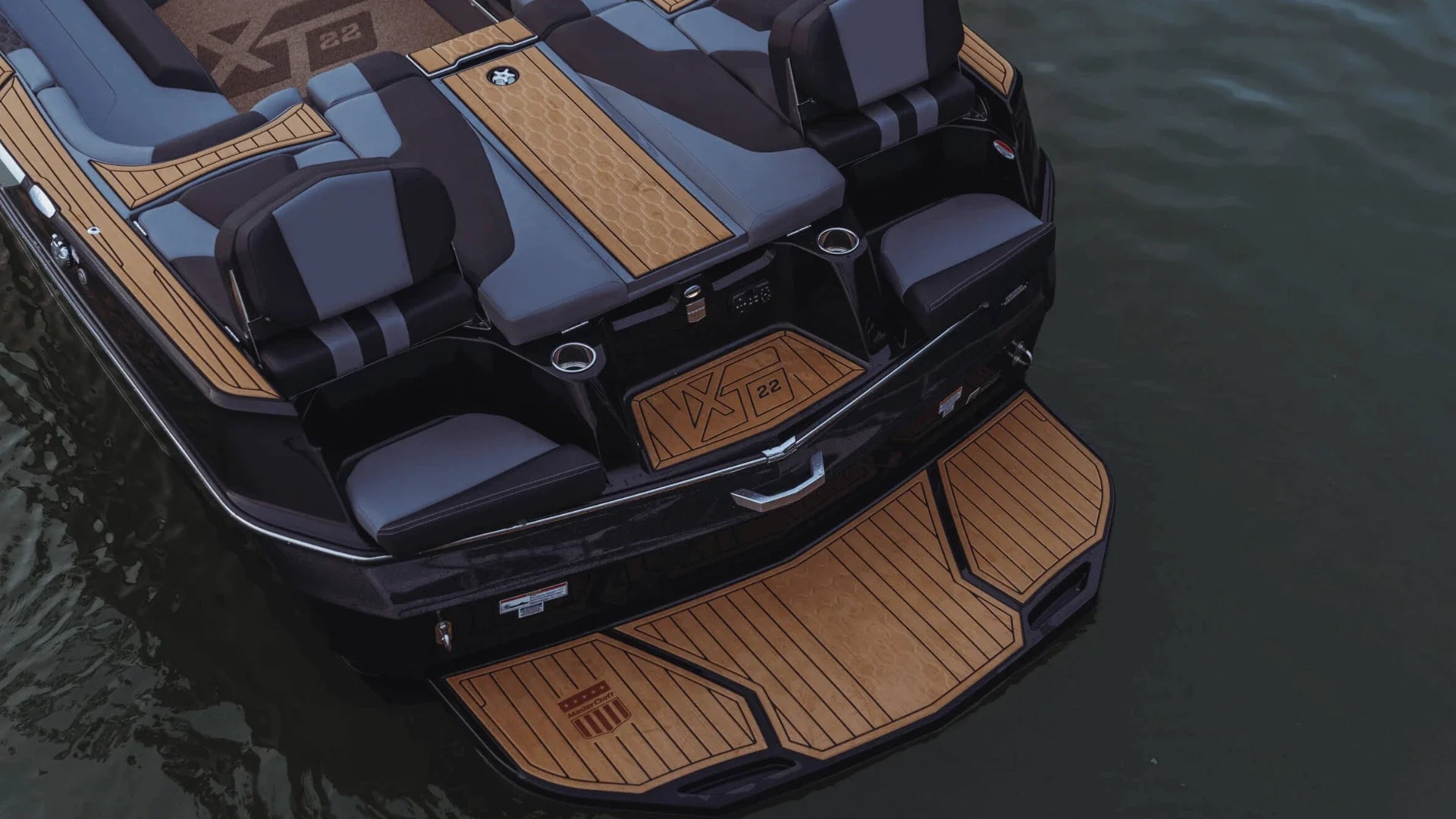
Faux-teak stripes, diamond textures, camouflage and solid colors allow a boat owner to coordinate separate deck areas without using real teak.
Routine dirt, bait residue and spills can often be cleaned from the surface with fresh water, compatible mild soap and a soft brush or cloth. Stains and contamination are still easier to manage when addressed promptly.
Thickness describes the height of the material. Hardness and density influence how firmly it supports weight and how much it compresses. Two sheets with the same thickness can feel and perform differently.
| General thickness category | Typical planning use | What to check |
|---|---|---|
| Lower-profile foam, often around 3–4 mm | Selected pads, accents and areas with limited clearance | Less cushioning and greater visibility of substrate irregularities |
| General-purpose foam, often around 5–6 mm | Many recreational deck zones and universal DIY sheets | Hatch, door, seat-base and transition clearance |
| Thicker foam, often around 7–9 mm | Helm pads or localized standing areas prioritizing cushioning | Higher edges, tighter curves and concentrated compression |
| Special-purpose thicknesses | Selected custom pads and non-standard applications | Product firmness, fit, hardware movement and intended use |
These are broad planning categories, not specifications for every product. Confirm the actual thickness, backing and dimensions on the individual product page. The EVA foam hardness guide explains why thicker or softer is not automatically better.
| Pattern | Planning strength | Main caution |
|---|---|---|
| Diamond | Flexible visual direction across varied deck zones | Texture still requires normal cleaning and safe wet-deck use |
| Faux-teak stripe | Traditional marine appearance | Stripe direction and seams must align between panels |
| Camo diamond | Fishing, hunting and utility-focused styling | Choose color with sun exposure and surrounding surfaces in mind |
| Solid color | Simple panels, accents and coordinated pads | Surface marks and color contrast may be more visible |
Mark bow direction on the backing before cutting. Long stripes and routed lines make reversed panels or misaligned seams easier to notice.
| Project style | Starting product | Best planning use |
|---|---|---|
| General-purpose deck upgrade | Diamond Pattern EVA Foam Boat Flooring | Pontoons, fishing boats, aluminum boats and mixed deck zones |
| Traditional teak-inspired appearance | Faux Teak Stripe EVA Foam Boat Flooring | Directional layouts where stripe alignment is planned before cutting |
| Fishing and utility styling | Camo Diamond EVA Foam Boat Flooring | Casting decks, utility areas and rugged visual themes |
| Simple coordinated sections | Solid Color EVA Decking | Accent panels, pads and cleaner single-color layouts |
These are product-selection starting points, not model-specific fitment claims. Confirm the product dimensions, thickness, adhesive option, color and available inventory before ordering. Browse the ready-to-buy EVA boat flooring collection for current options.
| Boat or area | Why EVA may fit | Critical planning point |
|---|---|---|
| Pontoon walkway and helm | Sectional coverage around furniture and gates | Divide the layout at natural furniture and transition lines |
| Aluminum or jon boat | Lightweight cut-to-fit surface | Remove oxidation, grease and unstable paint before bonding |
| Fishing or bass boat | Non-fabric casting-deck surface | Protect the foam from hooks, tools and dragged equipment |
| Cockpit and center console | Suitable for selected traffic and standing zones | Keep drains, scuppers, fasteners and service access clear |
| Swim platform | Useful for shaped barefoot-contact areas | Template curves accurately and inspect exposed edges |
| PWC or jet ski pad | Smaller shaped coverage zones | Do not assume fitment without the exact year, model and layout |
A premium adhesive cannot compensate for a wet, dirty or unstable deck. The substrate must be structurally sound, fully dry and free from wax, oil, salt, polishing residue, oxidation and loose coating. Painted surfaces should be firmly bonded and tested when compatibility is uncertain.
Backing selection should reflect the actual substrate and exposure rather than the boat name alone. Review the PoseidonDeck adhesive vs 3M adhesive guide before choosing an adhesive option.
Do not remove the release liner until the complete panel arrangement has been checked on the boat.
| Choose universal sheets when | Choose custom panels when |
|---|---|
| The deck can be divided into manageable shapes | The layout contains many compound curves or closely fitted hatches |
| You can measure, cut and install the material yourself | Pattern lines and borders must continue across coordinated panels |
| Budget control and direct purchase are priorities | Logos, routed borders or a CAD-managed layout are required |
| Small gaps and hand-cut edges are acceptable | A precise fitted appearance is important enough to justify templating and design work |
Even boats with the same model name can differ by year, factory option, hardware position, repair history and owner modification. Custom production should be based on the actual boat. Review the custom flooring process before submitting a project.
| Material | Where it may be preferred | Where EVA may be preferred |
|---|---|---|
| Marine vinyl | Broad, firm floor coverage | Cushioned sectional panels and deck-pad styling |
| Marine carpet | Traditional fabric feel | Non-fabric surface cleaning and localized replacement |
| Rubber mats | Heavy-duty removable work zones | Lower-profile fitted marine appearance |
| Synthetic teak | Premium professionally fitted plank layouts | DIY cutting and budget flexibility |
| Real teak | Traditional authenticity and restoration value | Lower weight, simpler installation and reduced wood maintenance |
Material quality, installation and use conditions vary widely. Use the boat flooring material comparison before deciding that EVA is the correct choice for the entire vessel.
Routine care begins with fresh water, compatible mild soap and a soft cloth or brush. Remove grit before scrubbing, rinse away cleaner residue and avoid unverified solvents, waxes and protectants. Do not direct concentrated pressure beneath exposed edges.
There is no universal lifespan for every EVA installation. Foam construction, color, sun and reflected heat, traffic, cleaning, storage, adhesive, substrate preparation and edge exposure all affect service life. Use the cleaning and maintenance guide and the lifespan guide for detailed care and durability information.
For straightforward DIY areas, begin with the PoseidonDeck ready-to-buy EVA boat flooring collection and confirm the dimensions, pattern, backing and layout before purchasing.
For compound curves, coordinated hatch panels, routed borders or other complex fitted work, review custom boat flooring or send photos, measurements and project details through Contact Us.
For short answers across buying, fit, installation and care, use the EVA foam boat flooring FAQ hub.
Share:
Best EVA Foam Boat Flooring for DIY: Sizes and Buying Guide
Boat Decking Trends 2026: EVA Foam, DIY Upgrades and Better Planning