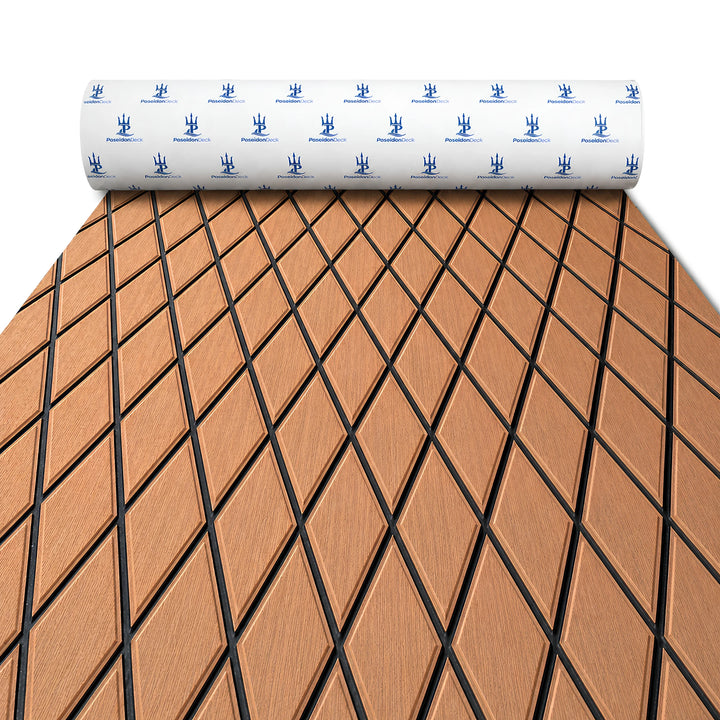
Classic Faux Teak EVA Foam Boat Flooring
From $100.00
View flooring optionsPontoon Boat Flooring Guide
Pontoon boat flooring should balance comfort, a practical walking surface, easy cleaning and manageable installation. EVA foam is a lightweight marine flooring option that can be cut into deck sections and planned around common pontoon layouts.
Use this page as the pontoon-specific planning and shopping hub. If you are deciding whether EVA is suitable for your pontoon, start here; if you need the full measuring, quantity and installation process, continue to the detailed Pontoon Boat Flooring Guide.
Common pontoon flooring zones include the helm, center walkway, forward lounge area, rear boarding zone and selected deck sections around furniture. EVA is a surface covering, so the underlying deck still needs to be structurally sound, dry and suitable for adhesive-backed material.
Choose universal sheets when the deck is relatively simple and you are comfortable measuring, cutting and installing the material yourself.
Choose a custom route when the pontoon has many furniture cutouts, curves, coordinated routed lines or a layout that is difficult to reproduce from rectangular sheets. See Custom Boat Flooring.
Do not estimate material from pontoon length alone. Measure the actual open deck zones around seating, gates, consoles, ladders and storage access. Then confirm whether every panel fits inside the selected sheet dimensions.
Use the boat deck measurement guide and EVA sheet calculator before ordering.
Old carpet glue, loose coatings, moisture, oxidation and soft plywood can all affect the final installation. If the deck condition is uncertain, read the EVA flooring substrate guide first.
Dry-fit every piece before exposing the adhesive liner, keep gates and hatches clear, and apply firm pressure across the full panel and perimeter. Follow the peel-and-stick installation guide.
For material benefits, limitations, thickness, firmness and buying routes, read the EVA Foam Boat Flooring Guide.
No. Many DIY projects work well with sectional coverage in the highest-use zones.
It is generally better to remove unstable carpet and inspect the substrate rather than bond new flooring over a weak layer.
Yes, when the deck geometry is manageable and you are prepared to measure, template and cut the material yourself.
EVA foam adds cushioning underfoot for cruising, family use and long days on a pontoon deck.
A textured marine surface creates a practical walking surface and is easier to rinse and maintain than many fabric-style floor coverings.
Sheets can be planned around gates, benches, consoles and other deck features instead of forcing one oversized piece.
Start with universal cut-to-fit EVA sheet styles suited to larger deck zones. These are not model-specific fitments; measure each pontoon area and choose the sheet size, texture and finish that best matches your layout.
Compare layout planning, comfort, seams and DIY considerations before choosing a pontoon deck surface.
Compare EVA foam with other common boat flooring materials by comfort, maintenance, installation and use case.
Review surface preparation, dry fitting, cutting, adhesive application, rolling pressure and aftercare before installation.
EVA foam is a practical pontoon flooring option when you want cushioning, a marine-oriented textured surface and a customizable layout. The deck underneath should be structurally sound, clean, dry and properly prepared before installation.
Usually not. Dividing a pontoon deck into manageable sections makes measuring, dry fitting and adhesive installation easier, especially around benches, gates and consoles.
Measure each usable deck zone separately, note fixed obstacles and create a simple layout before ordering. For model-specific projects, confirm the boat year, model and configuration before relying on a pre-cut fitment.