
Article guide
Care & Repair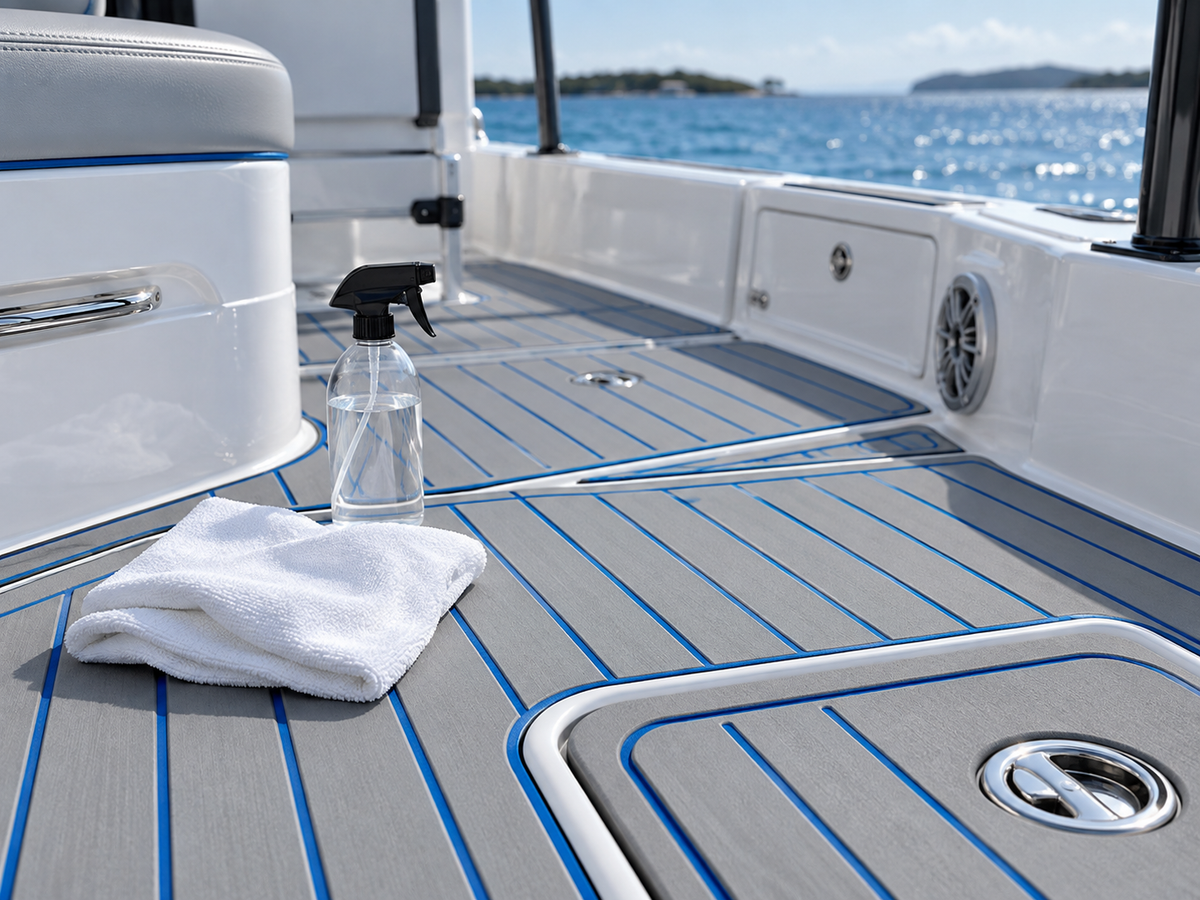
Article guide
Care & RepairBlue, black or other colored runoff from EVA boat flooring can be alarming, especially when the deck looks normal while rinse water or a white cloth picks up pigment.
The first step is not to assume that every trace of color means the foam is failing. Temporary surface residue, contamination from another product and persistent pigment transfer are different problems and should be diagnosed differently.
This guide explains what to check, how to document the condition and what not to do before contacting the seller or deciding whether a section needs replacement.
A small amount of removable surface residue after manufacturing, cutting or installation can be different from repeated color transfer that continues after normal rinsing and cleaning.
Persistent colored runoff or repeated pigment transfer should be investigated rather than automatically treated as normal. The exact cause can involve the foam, pigment system, surface residue, cleaner, another material on the boat or unusual exposure.
| What you observe | Possible explanation | Recommended next step |
|---|---|---|
| Light color on the first rinse only | Loose manufacturing or cutting residue | Rinse again with fresh water and document whether it stops |
| Color appears every time the deck gets wet | Possible persistent pigment or surface-layer transfer | Stop aggressive cleaning, document the pattern and contact the seller |
| Only a white cloth shows color after hard rubbing | Could be friction-related transfer or residue | Repeat with gentle pressure and compare an unused offcut if available |
| Color appears only after one cleaner is used | Possible cleaner interaction | Stop the cleaner and inspect the product instructions |
| Only one small area transfers color | Localized heat, chemical exposure, contamination or material variation | Compare the affected area with nearby flooring |
| Runoff is colored but the foam is not | Contamination from another boat surface or accessory may be involved | Trace the water path before blaming the flooring |
If you see colored runoff, begin with a controlled fresh-water rinse. Strong solvents, concentrated degreasers or bleach-heavy cleaners can change the foam surface, pigment, adhesive or deck coating and make it harder to identify the original cause.
If the color disappears quickly and does not return, the issue may have been loose surface residue. If the same color repeatedly appears under normal rinsing, continue the diagnosis.
A clean white cloth can help show whether color is transferring directly from the EVA surface.
This is not a laboratory colorfastness test, but it can help separate visible runoff from direct surface transfer and creates useful documentation for support.
Boats contain many materials that can contaminate rinse water: canvas dyes, seat vinyl, painted surfaces, rubber, cleaning products, polishing residue, antifouling contamination, dirt and even a colored towel or brush.
Before concluding that EVA is the source, check the direction of water flow. If blue water begins upstream from the foam or only appears after washing another component, the flooring may be collecting runoff rather than producing it.
Clean tools matter too. A brush previously used on a painted or dyed surface can transfer color onto the EVA and make the problem appear to originate from the flooring.
The location of color transfer can provide clues.
| Pattern | What it may suggest |
|---|---|
| Entire sheet transfers evenly | Surface residue or material/pigment issue affecting the whole piece |
| Only sun-exposed areas transfer | Possible environmental aging or heat-related surface change |
| Only areas near fuel, cleaners or chemicals transfer | Possible chemical interaction |
| Only high-traffic areas transfer | Possible wear, abrasion or contamination from footwear |
| Only one production panel transfers | Possible panel-specific or batch-specific variation |
| Color appears around seams but not the center | Check residue, trapped contamination and cleaning methods around edges |
Do not use one symptom to diagnose the material conclusively. The purpose is to narrow the problem before changing the surface with stronger treatment.
Sunlight and heat can change the appearance of outdoor materials over time, but visible fading and wet color transfer are not exactly the same symptom.
If color transfer appears only after prolonged outdoor exposure, compare protected and exposed sections. Record the color, location, age of the installation, normal storage conditions and whether the affected area receives reflected heat from glass or metal.
A responsible diagnosis should separate fading, chalking, surface wear, pigment transfer and staining instead of labeling all color change as “UV damage.”
Yes. An aggressive cleaner can alter the surface, soften material, remove a finish or react with pigments and nearby coatings. It can also make a warranty or support investigation harder because the original condition has been changed.
When color transfer is unexplained:
For routine cleaning guidance, see the EVA boat deck maintenance guide.
Good documentation helps distinguish a one-time surface issue from a recurring material problem.
If physical texture or layer condition has changed as well as the color, stop treating the issue as cosmetic only.
Color transfer alone does not automatically determine whether flooring is safe or usable, but replacement becomes more reasonable when persistent transfer occurs together with physical material change.
Inspect for:
If the substrate underneath is also damaged, repair the boat surface before installing replacement flooring.
When appearance is critical, especially with dark blue, black or other saturated colors, test a sample or offcut before covering a large deck.
This simple pre-installation check cannot predict years of outdoor aging, but it can identify obvious surface-transfer or cleaner-compatibility problems before a large adhesive-backed installation becomes difficult to reverse.
| Condition | What it means | Typical sign |
|---|---|---|
| Color transfer | Color moves from the flooring surface to water, cloth or another object | Colored rinse water or pigment on a white cloth |
| Fading | The visible color of the flooring becomes lighter or changes over time | Exposed area looks different from a protected area |
| Staining | Another substance changes the appearance of the surface | Fish residue, sunscreen, oil or another contaminant leaves a mark |
| Surface residue | Loose material sits on top of the surface and may wash away | Problem reduces or disappears after controlled rinsing |
These symptoms can occur together, which is why photographs and repeated controlled checks are more useful than one aggressive cleaning attempt.
Repeated blue runoff should not simply be dismissed without investigation.
A one-time trace of loose surface residue is different from repeated blue runoff. Persistent color transfer should be documented and investigated rather than automatically considered normal.
Do not use an aggressive chemical as the first response. It can change the foam or pigment and make diagnosis harder. Begin with fresh water and a mild compatible method.
No. Fading is a visible change in the flooring color over time, while color transfer means pigment or colored material moves to water, cloth or another surface. They can occur separately.
Use a small offcut or sample. Rinse it with fresh water, perform a gentle damp white-cloth test, let it dry and repeat after normal exposure. Also test any planned cleaner on a hidden area.
Persistent transfer should be evaluated with the seller. Replacement is more clearly indicated when the issue is accompanied by swelling, stickiness, cracking, layer separation or other physical damage.
Diagnose why EVA boat flooring edges peel or lift, distinguish adhesive failure from contamination or substrate problems, and decide when to repair, re-bond or reinstall.
Read moreLearn why EVA boat flooring can become hot in direct sun, how color, shade, airflow and reflected heat affect the surface, and how to compare options without relying...
Read moreLearn the most common EVA foam boat flooring problems—including peeling edges, heat, stains, color transfer, adhesive failure and removal—and how to reduce the risk before and after installation.
Read more


Share:
EVA Foam Boat Flooring Problems: Peeling, Heat, Stains & Removal
EVA Boat Flooring Substrate Guide: Fiberglass, Aluminum, Plywood & Painted Decks