
Article guide
Buying Guide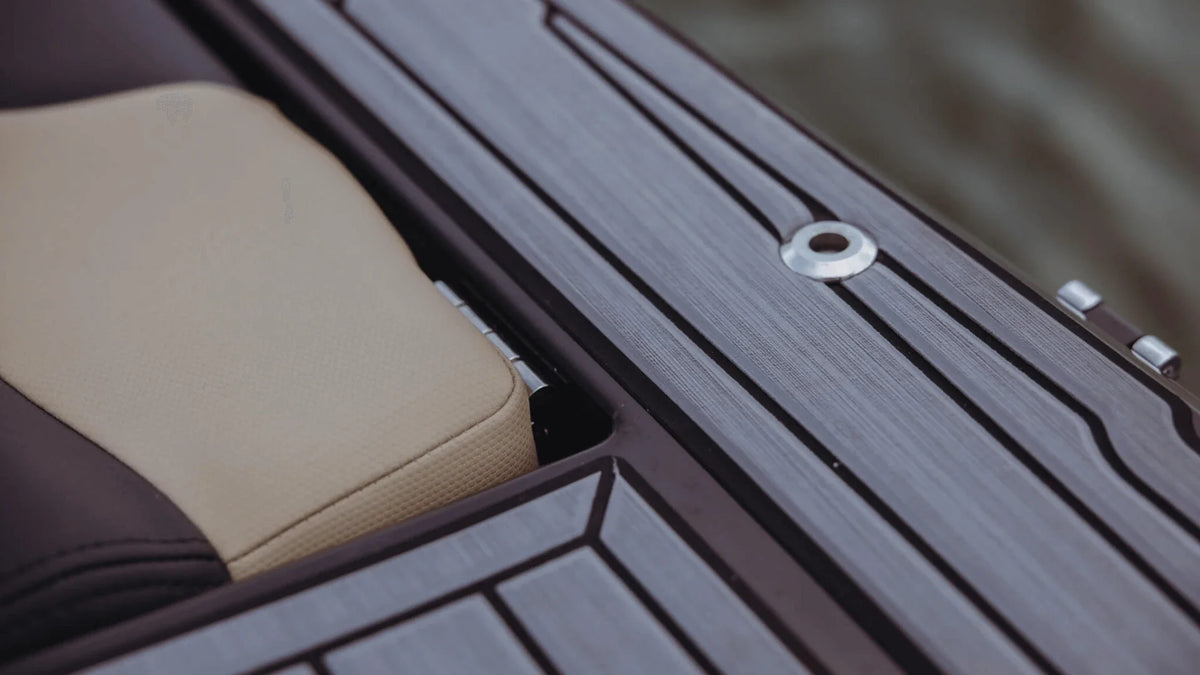
Article guide
Buying GuideA practical DIY SeaDek alternative is a universal, adhesive-backed EVA foam sheet that you measure, cut and install for your own deck layout. This buying path can work well for boat owners who want a cushioned marine-deck appearance, textured footing and a more direct way to upgrade selected areas without ordering a fully fabricated, model-specific kit.
PoseidonDeck and SeaDek are separate brands. PoseidonDeck ready-stock sheets are generally universal cut-to-fit material, not pre-cut panels guaranteed to match a specific boat year, make or model unless a product page explicitly says otherwise. For a broader comparison of branded custom systems, DIY sheets and service models, read our SeaDek vs DEKit vs EVA foam boat flooring comparison.
The right choice depends less on the brand name alone and more on your deck shape, measurement accuracy, desired appearance, installation ability and total project budget.
| Buying path | What you receive | Best suited to | Main responsibility |
|---|---|---|---|
| Universal ready-stock sheets | Rectangular EVA foam sheets that you cut to fit | Simple zones, DIY projects and buyers who want to start with available material | The buyer measures, plans seams, cuts and installs |
| Model-specific pre-cut kit | Panels marketed for a stated boat or watercraft fitment | Verified year, make, model and layout combinations | The buyer must confirm that the listed fitment matches the actual boat |
| Custom-fabricated panels | Panels created from an approved template, drawing or measurement process | Curves, hatches, multiple zones and projects needing a more tailored layout | Accurate templates, dimensions and final design approval are essential |
PoseidonDeck's primary DIY route is universal ready-stock EVA foam. It gives you flexibility, but it also means that measuring, cutting and dry fitting are part of the project. Do not assume that a rectangular sheet is an exact-fit replacement for a branded or model-specific deck kit.
Ready-stock sheets are usually the most practical starting point when the deck can be divided into manageable sections and you are comfortable trimming the material yourself. Common project zones include:
This approach is especially useful when you want to improve one area first, control the number of sheets purchased or replace sections independently later. A modular layout is often easier to measure, cut and install than one oversized continuous piece.
Important limitation: EVA foam is a surface covering, not a structural repair. It should not be used to hide rotten plywood, corrosion, soft fiberglass, loose paint, unstable panels or water trapped beneath the existing surface. Repair the substrate before adding new flooring.
| Style | Visual direction | Planning notes |
|---|---|---|
| Diamond-pattern EVA foam | Technical, utility-focused deck appearance | The repeating texture can suit fishing, cockpit and work areas; align adjacent sheets consistently |
| Stripe-pattern EVA foam | Faux-teak or linear marine look | Stripe direction is highly visible, so plan orientation and seams before cutting |
| Camo diamond EVA foam | Camouflage-inspired appearance | Useful when the visual theme matters; review pattern direction and color placement across multiple sheets |
| Solid-color EVA boat decking | Cleaner, simpler color field | Can reduce directional-pattern concerns, but seams and cut quality remain visible |
No texture is completely slip-proof, and visual pattern alone does not determine real-world grip. Water, sunscreen, soap, fish residue, algae, footwear, surface wear and cleaning habits can all change traction.
PoseidonDeck product options may include widths such as approximately 15.7, 23.6, 35.4 and 46.2 inches with a commonly listed length of 94.5 inches. Availability can vary by pattern, color, adhesive option and product page, so confirm the exact selectable size before ordering.
| Sheet approach | Potential advantage | What to check |
|---|---|---|
| Narrower sheet | Easier handling and trimming in tight zones | May create more seams across a wide deck |
| Mid-width sheet | Useful balance for walkways and segmented layouts | Confirm that hatches and main panels nest efficiently |
| Wider sheet | May reduce seams in broad rectangular areas | Can be harder to position and may create more offcut waste on irregular decks |
The largest sheet is not automatically the most economical. A smaller sheet that matches your panel widths may produce less waste and be easier to install. Compare actual panel dimensions against the usable sheet area rather than choosing only by total square footage.
Start by dividing the boat into separate installation zones. Measure the maximum length and width of each zone, including curves, hatch clearances and trimming margins. Our boat-deck measurement guide explains how to record those dimensions before ordering.
Next, use the EVA foam sheet calculator and layout guide. The calculator distinguishes between two different checks:
For early planning, a simple rectangular project may use roughly a 10% trimming allowance, a moderately irregular layout may need around 15%, and complex or strongly directional layouts may require 20% or more. These are planning factors rather than guarantees. Actual waste depends on nesting, errors, pattern alignment and usable offcuts.
A good layout plan can save more material than simply buying a larger sheet. Sketch every panel on paper or in a basic drawing and mark:
Whenever possible, place seams where they are visually logical and less likely to interfere with hatch movement, drainage or frequently lifted edges. Dry-position templates before cutting the foam. For a deeper decision between standard sheets, kits and fabricated panels, see boat flooring kits vs EVA sheets vs custom-cut mats.
| Substrate condition | Recommended action |
|---|---|
| Clean, stable fiberglass or gelcoat | Remove wax, oil and residue; confirm the surface is completely dry |
| Stable painted surface | Confirm the paint is firmly bonded and compatible with the cleaning and adhesive process |
| Sound aluminum | Remove oxidation, oil and contamination and prepare the surface appropriately |
| Severely textured or uneven surface | Test bonding carefully; high and low points can reduce adhesive contact |
| Old carpet or carpet glue | Remove it and prepare a stable, smooth substrate before installation |
| Wet, dirty, soft, rotten or corroded surface | Stop and repair the underlying problem first |
Also consider concentrated reflected heat from certain windshields, polished surfaces or covers. Unusually high localized heat can affect many deck materials and adhesives, so inspect the installation area and avoid unsupported claims that any flooring is permanent in every environment.
Read the complete DIY peel-and-stick EVA foam installation guide before beginning. Installation quality depends heavily on preparation and positioning; stronger adhesive cannot compensate for a dirty, wet or unstable deck.
Do not assume that supplemental adhesive is automatically required. First confirm the backing option included with the selected product, the deck material and the surface condition. Adding an incompatible adhesive or spraying it over contamination can make the project harder rather than improving it.
For demanding applications, some buyers compare the standard PoseidonDeck backing with 3M adhesive options or consider a compatible 3M spray adhesive for an appropriate use case. Review the PoseidonDeck adhesive vs 3M adhesive guide and follow the applicable product instructions. Adhesive selection does not remove the need for correct cleaning, drying and pressure.
EVA foam textures are intended to provide a more usable deck surface than a completely smooth sheet, but no marine flooring should be described as safe in every condition. Standing water, sunscreen, soap, fuel residue, fish slime, algae and loose grit can reduce traction.
Review our guide to texture, water, cleaning and boat-floor grip. After installation, use the methods in the EVA boat-deck maintenance guide to remove contamination without unnecessarily damaging the foam.
| Project condition | More practical starting point |
|---|---|
| Simple rectangular or segmented zones | Universal ready-stock sheets |
| Owner is comfortable measuring and cutting | Universal ready-stock sheets |
| Budget prioritizes material over fabrication labor | Universal ready-stock sheets |
| Many curves, hatches and closely fitted borders | Consider a custom layout |
| Project requires routed borders, logos or a highly coordinated multi-panel design | Consider custom fabrication after confirming capabilities |
| Buyer cannot produce reliable measurements or templates | Resolve the measurement process before purchasing any fitted product |
Custom does not eliminate measurement risk. Even boats with the same model name can have layout differences, modifications or production tolerances. A custom project should begin with an accurate template or dimension set and a clear approval process. For complex projects, review the PoseidonDeck custom boat flooring process.
Do not compare options by sheet price alone. Total project cost can include:
Use our EVA foam boat flooring cost and budget guide to compare material quantity, installation method and project complexity.
For a direct-purchase starting point, browse PoseidonDeck best-selling EVA boat flooring sheets.
No. PoseidonDeck and SeaDek are separate brands. This guide explains how a universal PoseidonDeck EVA foam sheet can serve as a DIY buying option for shoppers researching SeaDek alternatives.
Standard sheets are universal cut-to-fit material unless the product listing explicitly confirms a specific pre-cut fitment. Do not purchase a rectangular sheet expecting it to arrive shaped for your boat.
No. Remove the carpet and old residue and create a stable, clean, dry substrate. Installing over carpet prevents reliable contact and can trap contamination or moisture.
There is no universal best pattern. Choose based on the appearance, direction, seam plan, cleaning needs and available product options for your project.
Measure every zone, calculate area and then test whether the panel shapes fit within the sheet dimensions. The layout check is just as important as the square-foot calculation.
It can be considered when the aluminum is sound, stable, properly prepared and free from oxidation, grease and moisture. Surface condition matters more than the boat category alone.
The closed-cell foam material resists water absorption, but the complete installation should not be described as absolutely waterproof. Edges, seams, adhesive contact and the underlying deck still require inspection and maintenance.
No. Texture may improve footing compared with a smooth surface, but water and contamination can still reduce grip. Clean spills and residue promptly and use appropriate footwear and caution.
A segmented layout can make localized replacement more practical. However, an older installed panel and a new replacement may not look identical because of exposure, wear or material variation. Keeping usable offcuts can help with future repairs.
Consider custom flooring when the project has complex curves, numerous hatches, precise panel borders or design requirements that are difficult to achieve with hand-cut rectangular sheets.
Use the dedicated SeaDek, DEKit and EVA foam comparison guide. That page focuses on service model, fitment, customization and total project responsibility rather than promoting one option as universally better.
No. Flooring material cannot repair structural damage. Replace or repair the affected deck components before installing a new surface covering.
For most manageable DIY zones, begin with a measured layout and a ready-stock sheet that matches the required width, pattern direction and installation surface. Browse the best-selling EVA boat flooring collection, then calculate quantity before ordering. For a complex multi-panel layout, send the project details through the PoseidonDeck contact page so the appropriate buying path can be reviewed.
A practical buyer decision guide based on recurring owner questions about EVA boat flooring comfort, cleaning, heat, stains, adhesive, installation effort, repairs, lifespan and total project cost.
Read moreCompare PoseidonDeck self-developed and 3M adhesive backing options for EVA boat flooring by cost, exposure, surface preparation, installation and project type.
Read moreCompare pre-cut boat flooring kits, universal EVA sheets and custom-cut mats by fit, measuring, installation, cost, risk and best use before ordering.
Read more


Compartir:
How to Install EVA Foam Boat Flooring: DIY Peel-and-Stick Guide
Best Boat Flooring Options: Materials, Costs and Best Uses