
Article guide
Care & Repair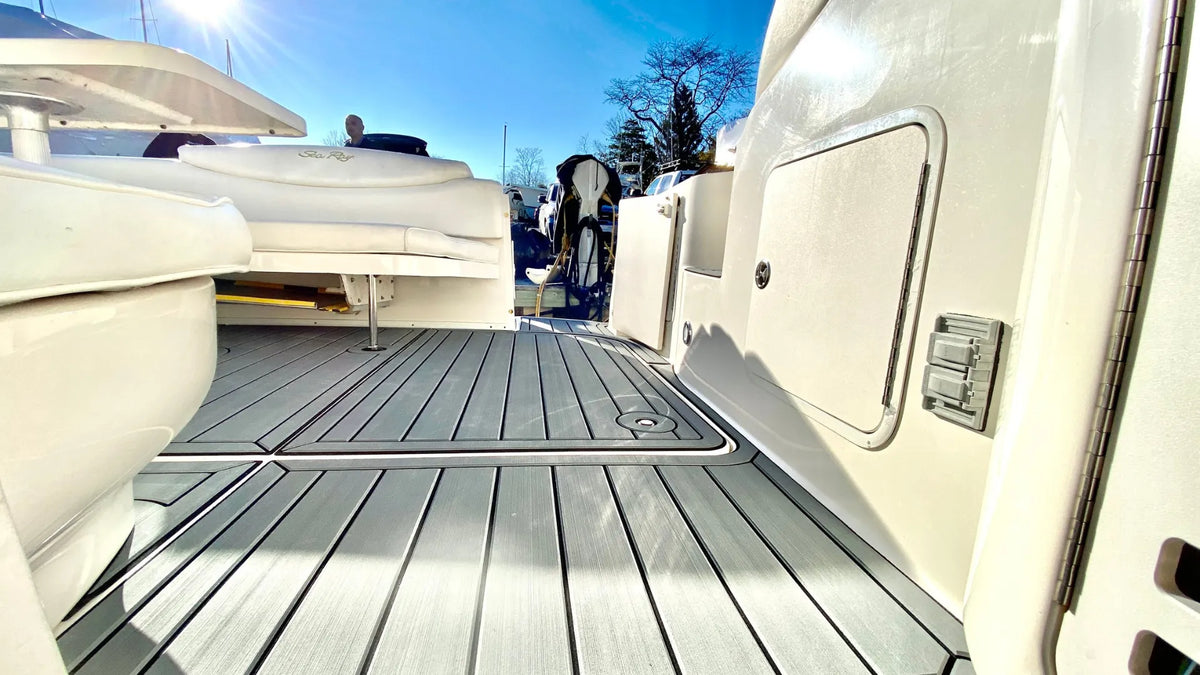
Article guide
Care & RepairUpdated August 2026
No boat flooring is completely slip-proof. A textured EVA foam surface can provide more underfoot definition than a smooth deck, but real-world grip changes with water, sunscreen, soap, fish residue, mud, footwear, surface wear, drainage and cleaning. The safest buying decision is to choose a suitable textured material, install it without raised edges or blocked drains and keep the surface free from slippery contamination.
This guide explains what “non-slip boat flooring” should mean in practical use, how common deck conditions affect traction and how to choose and maintain EVA foam flooring without relying on unrealistic safety guarantees. For routine care instructions, use the EVA boat deck maintenance guide.
Boat flooring feels more secure when several conditions work together:
Texture alone cannot overcome contamination, poor drainage or unsafe movement. Treat “non-slip” as a search term and product category, not as a promise that slipping is impossible.
| Term | Practical meaning | Important limitation |
|---|---|---|
| Textured boat flooring | The surface includes grooves, diamonds, brushed lines or another raised/recessed pattern | Texture does not guarantee a specific traction level in every condition |
| Slip-resistant boat flooring | The material is intended to provide useful footing compared with a smoother surface | Performance changes with water, residue, wear, footwear and installation |
| Non-slip boat flooring | A common shopping phrase for marine flooring designed for wet-use environments | No surface should be described as impossible to slip on |
| Certified traction rating | A result produced by a defined test method under specified conditions | Do not assume a rating exists unless the exact product documentation provides it |
PoseidonDeck standard EVA sheets should be evaluated by their actual texture, size, adhesive option, intended deck zone and maintenance needs. This guide does not claim a laboratory slip rating for products that do not publish one.
A thin water film can change how bare feet or footwear interact with any surface. A textured pattern may help break up contact with a smooth film, but water can still reduce stability. Pooling is a larger concern because it can hide debris, soap or algae and makes it harder to see the actual surface condition.
Keep drains, scuppers and channels open. Do not cover drainage paths with foam, and do not create seams that direct water into a low spot. After washing or heavy rain, move water off the deck and allow the area to dry where practical.
Sunscreen and oil can transfer from hands, feet, seats and towels onto the deck. Even a small invisible film may make a textured surface feel different. High-use family and swim-platform zones should be rinsed and cleaned after days with heavy sunscreen use rather than waiting for visible discoloration.
More cleaner is not always better. Soap left in grooves can remain slick after the visible dirt is gone. Wax, polish and shine-enhancing products are especially unsuitable for areas where traction matters. Rinse repeatedly until no foam or residue remains, and use only cleaners compatible with the EVA surface and the surrounding deck.
Fishing decks can collect bait residue, fish slime, scales, mud and plant material. These contaminants should be removed promptly because they can fill surface texture and create a lubricating layer. Algae or organic growth around constantly damp edges also signals that the area needs cleaning, drying and an inspection for trapped moisture.
Loose grit can reduce stable contact underfoot and may act like small rolling particles between footwear and the deck. It can also abrade EVA foam when stepped on repeatedly. Rinse or sweep away sand and dried salt before scrubbing so particles are not dragged across the surface.
Sole material, tread condition and contamination on shoes affect grip. Worn smooth soles, muddy footwear and shoes carrying fuel or oil can reduce stability even on a textured deck. Bare feet also respond differently to heat, water and texture. Choose deck colors with sun exposure in mind and do not rely on flooring texture to compensate for unsuitable footwear.
Repeated traffic can gradually soften sharp texture edges or compress the highest points of a pattern. Hooks, knives, anchors, cooler feet and dragged equipment can cut or flatten localized areas. Inspect high-use paths and replace damaged sections before the surface develops loose pieces or raised edges.
Texture selection should match the boat layout and cleaning routine. The table below describes planning characteristics, not certified rankings.
| Texture or style | Useful planning characteristic | What to watch |
|---|---|---|
| Diamond pattern | Defined multidirectional surface and forgiving visual alignment across independent zones | Keep recesses clear of sand, bait residue and dried soap |
| Faux-teak stripe | Long grooves create a traditional marine appearance and a clear directional layout | Plan stripe direction, rinse grooves thoroughly and avoid trapping residue along seams |
| Camo diamond | Combines a defined diamond surface with fishing or utility styling | Clean organic residue even when the camouflage pattern makes dirt less visible |
| Solid-color EVA | Creates a simple coordinated deck or accent zone | Confirm the exact product texture; color alone does not determine grip |
| Worn or damaged texture | No longer represents the original surface condition | Inspect compression, cuts, lifted edges and smooth high-traffic patches |
There is no universal “best” pattern for every wet deck. Diamond can be practical for separated DIY sections, while faux-teak stripes suit appearance-focused layouts when their direction and grooves are maintained. Compare the current options in the PoseidonDeck ready-to-buy EVA flooring collection.
| Boat area | Main traction concern | Planning approach |
|---|---|---|
| Helm | Long standing periods, control access and possible wet footwear | Use a defined pad that covers the natural stance without blocking pedals, drains or seat movement |
| Cockpit | Mixed traffic, drinks, sunscreen, bait and equipment | Divide the area into manageable sections and keep cleaning access around seats and hatches |
| Fishing deck | Fish slime, bait, mud, hooks and repeated washdown | Choose easy-to-reach sections, preserve drains and plan replaceable panels |
| Swim platform | Frequent water, sunscreen and boarding hardware | Template accurately, inspect exposed edges and rinse after swim activity |
| Pontoon walkway | Family traffic, drinks, sand and broad sun exposure | Use manageable sheets, clean spills promptly and keep gates and furniture clearances functional |
| Steps and narrow transitions | Raised edges and limited foot placement | Measure each step separately and avoid creating a catch point at the leading edge |
For localized coverage planning, read the boat deck mats and pads guide. For a dedicated operator area, use the boat helm pad guide.
| Likely cause | What you may notice | Practical response |
|---|---|---|
| Fresh water only | Surface feels different while wet but returns to normal after drying | Move standing water toward drains and use normal wet-deck caution |
| Sunscreen or body oil | Slick film in seating, swim or lounge zones | Use mild compatible soap, a soft brush or cloth, then rinse completely |
| Soap residue | Foam, streaks or renewed slickness when water is added | Rinse repeatedly and reduce cleaner concentration during the next wash |
| Fish or bait residue | Organic film, odor or visible matter in texture | Remove solids, wash promptly with compatible mild soap and rinse thoroughly |
| Sand or dried salt | Loose particles or gritty movement underfoot | Rinse or sweep before scrubbing to avoid abrasion |
| Fuel or unknown chemical | Strong odor, discoloration, softening or an oily surface | Stop using the affected area, prevent ignition exposure, follow the chemical and flooring guidance and replace damaged material if necessary |
| Algae or persistent growth | Green, dark or slimy areas near damp edges | Clean with a compatible method, improve drying and inspect for trapped water or edge lifting |
| Worn or damaged foam | Smooth patch, cuts, gouges or loose material | Inspect the substrate and replace the affected section when safe cleaning cannot restore the surface |
Do not mix cleaners or apply an untested solvent in an attempt to remove a slippery film. A harsh chemical can damage the foam, weaken adhesive or affect the deck coating underneath.
Do not direct high-pressure water underneath exposed edges. Strong pressure may force water or debris beneath the foam. The full cleaning, stain and storage routine is covered in the EVA boat deck maintenance guide.
A well-textured material can still create a problem if it is installed poorly. Before adhesive contact, dry-fit every piece and verify the following:
During installation, remove the liner gradually, press from the center outward and roll the complete surface. Review the DIY EVA foam installation guide before cutting or bonding material.
Inspect the deck after heavy use, a spill, a fishing trip or an extended storage period. Look for:
If the underlying deck is soft, corroded, delaminated or unstable, stop treating the issue as a flooring-maintenance problem. Surface material cannot repair structural damage.
Start with the use area and installation plan rather than choosing only by the word “non-slip.” PoseidonDeck standard sheets are universal cut-to-fit material, not verified model-specific kits.
| Project direction | Ready-to-buy starting point | Planning note |
|---|---|---|
| General cockpit, pontoon or walkway | Diamond Pattern EVA Foam Boat Flooring | Useful for independent sections and all-direction visual texture |
| Traditional marine appearance | Faux Teak Stripe EVA Foam Boat Flooring | Plan groove direction and seam alignment before cutting |
| Fishing or utility styling | Camo Diamond EVA Foam Boat Flooring | Clean residue even when the pattern makes dirt less visible |
| Simple coordinated accent zone | Solid Color EVA Boat Decking | Confirm the selected product texture and exposure conditions |
For simple shapes, a ready-to-buy sheet is normally the most economical route. Custom cutting is more appropriate when complex curves, many hatches, routed borders or closely aligned multi-piece patterns make hand cutting impractical. Even then, accurate measurements or templates from the actual boat are required.
Textured EVA foam can provide useful footing in wet marine environments, but it is not slip-proof. Water, sunscreen, soap, fish residue, wear, footwear and drainage all affect real-world grip.
There is no universal answer without a defined test and use condition. Diamond and grooved surfaces both provide texture, but maintenance, contamination and installation can matter as much as pattern shape. Choose a texture that fits the boat area and can be cleaned effectively.
Common causes include sunscreen, soap residue, fish slime, algae, oil, sand, worn texture or standing water. Clean with a compatible mild method, rinse fully and inspect for damage or chemical exposure.
Avoid directing high-pressure water beneath exposed edges. Excessive pressure can force water or debris under the foam. Use the product’s care guidance and a gentler routine whenever possible.
No. Wax and polishing products can leave a film that changes footing and may be difficult to remove from texture. EVA flooring should normally be kept clean rather than polished.
Color does not determine traction. Texture, surface condition, contamination and wear are more relevant. Dark colors may feel warmer in direct sunlight, which can affect barefoot comfort.
It may be suitable when the fiberglass surface is structurally sound, stable, clean, fully dry and compatible with the selected adhesive. Wax, polish, grease and loose coatings must be removed first.
Keep ignition sources away, follow the fuel and boat safety guidance, stop using the affected walking area and inspect for softening, discoloration or adhesive damage. Do not apply an untested solvent. Replacement may be necessary if the material is damaged.
Not automatically. A removable mat can provide service access, but it must be secured so it cannot slide, bunch or interfere with controls. Adhesive-backed flooring must be installed flat with well-bonded edges.
Rinse after normal use and clean whenever residue is present. Fishing, swimming, muddy access or heavy sunscreen use may require cleaning after each trip. The correct frequency depends on how the boat is used and stored.
Shop PoseidonDeck ready-to-buy textured EVA boat flooring. Select the pattern, dimensions and adhesive option for the actual project, then follow the measurement, installation and maintenance guides before use. For complex fitted layouts, review custom boat flooring or send photos and measurements through Contact Us.
Diagnose why EVA boat flooring edges peel or lift, distinguish adhesive failure from contamination or substrate problems, and decide when to repair, re-bond or reinstall.
Read moreLearn why EVA boat flooring can become hot in direct sun, how color, shade, airflow and reflected heat affect the surface, and how to compare options without relying...
Read moreBlue or dark-colored runoff from EVA boat flooring should be diagnosed rather than dismissed. Learn how to separate surface residue from persistent color transfer, run simple checks and...
Read more


แบ่งปัน:
Boat Deck Mats and Pads: Best Uses, Materials and Sizing
Is EVA Foam Boat Flooring Worth It? Real-World Pros, Cons and Buyer Checklist